

On April 1st, the world gives itself permission to bend reality.
A joke here, a playful deception there, a tiny fracture in the ordinary script of things. The rules loosen. Certainty softens. Surprise becomes the main character.
April Fools’ Day may look like a lighthearted holiday — but beneath the laughter lives an ancient archetype: The Trickster.
And the Trickster has always been sacred.
Across cultures, trickster figures appear as agents of transformation:
- Loki in Norse mythology
- Hermes in Greek myth
- Anansi in West African folklore
- The Fool in Tarot
- Court jesters in medieval Europe
- Coyotes, ravens, foxes, shapeshifters
They disrupt expectations not to cause chaos — but to reveal truth.
Because illusion reveals the structure of belief.
And belief shapes reality.
April Fools’ Day reminds us that perception is negotiable.
What we accept as “real” often rests on agreement, expectation, and repetition.
Change the frame — and the story shifts.
The Calendar That Shifted Reality
One of the most popular origin stories traces April Fools’ Day to 1582, when France adopted the Gregorian calendar.
New Year’s Day moved from late March to January 1.
Those who continued celebrating the old New Year in early April were teased and called “April fools.”
Mock invitations were sent.
Fake gifts were delivered.
Paper fish were secretly taped onto backs — poisson d’avril.
The joke was simple:
time itself had been edited.
A collective revision.
An early example of reality being rewritten — and everyone agreeing to play along.
The Fool Archetype
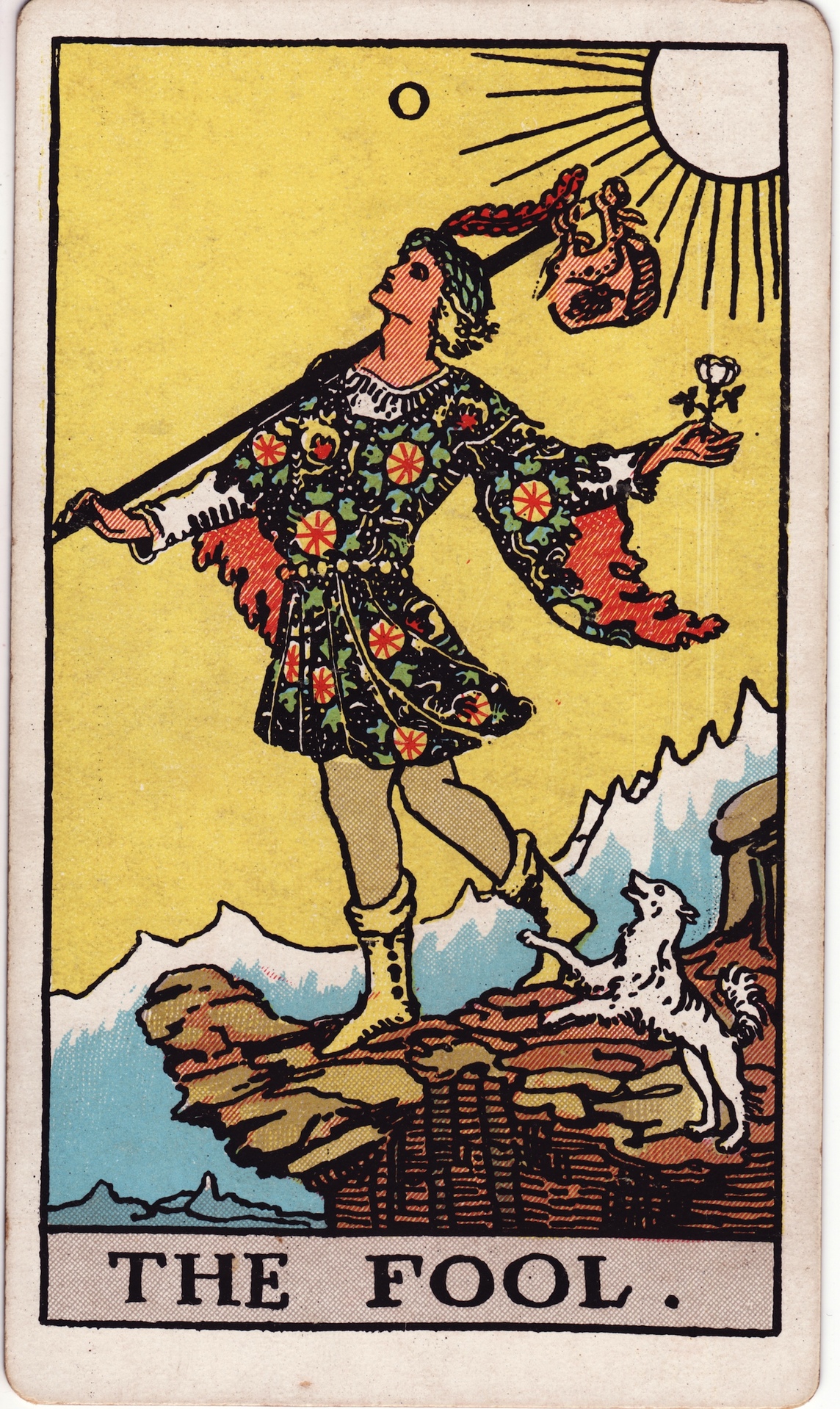
In Tarot, The Fool is card zero.
Not nothing — but infinite potential.
The Fool represents:
• stepping into the unknown
• trusting imagination
• embracing possibility
• rewriting assumptions
• choosing a new story
The Fool is not naive.
The Fool is free.
The Fool understands that reality responds to belief.
That what appears fixed may simply be unexamined.
That sometimes the most powerful move… is to refuse to take anything too seriously.
Trickster Energy & Conscious Creation
Trickster energy dissolves rigidity.
It asks:
What if the rules are more flexible than they appear?
What if identity is fluid?
What if the story can change?
What if the impossible is simply unfamiliar?
Playfulness lowers resistance.
And lowered resistance allows new realities to enter.
April Fools’ Day becomes an invitation:
Loosen the script.
Release the need to control every outcome.
Allow curiosity.
Allow delight.
Allow surprise.
Reality often rearranges itself most beautifully when we are not gripping it too tightly.
Court Jesters & Hidden Wisdom

In medieval courts, jesters held a rare privilege:
They could speak truths others could not.
Through humor, they revealed blind spots.
Through absurdity, they softened egos.
Through play, they shifted perspective.
Sometimes wisdom wears bells.
Sometimes insight arrives disguised as a joke.
Sometimes laughter opens doors logic cannot.
The Sacred Joke
April Fools’ Day whispers:
Reality is responsive.
Stories can be revised.
Identity is creative.
Belief is powerful.
Imagination is not escapism — it is authorship.
Perhaps the ultimate joke is this:
The world is more flexible than we were taught.
And we are more powerful than we were told.
Play wisely.
Dream boldly.
Choose beautifully.